- Key Takeaways
- The Truth About Rental Property Costs for New Investors
- Why Everyone Thinks Rentals Cost More Than They Actually Do
- What Does a Realistic Down Payment Actually Look Like?
- The Hidden Costs Nobody Warns You About
- Running the Real Numbers on Your First Deal
- How to Get Started With Less Cash Than You Think
- Which Markets Make the Smallest Budgets Work?
- Should You Save Longer or Jump in Sooner?
- Financing Options Beyond the Standard Mortgage
- Mistakes That Can Wipe Out Your Starter Budget
- Budgeting for the First 12 Months of Ownership
- How Experienced Investors Scale From One to Many
- Conclusion
Key Takeaways
- Beginners can enter the rental market with as little as $20,000 to $40,000 if they choose affordable markets and use conventional loan options
- House hacking lets you buy a multi-unit property with just 3.5% down by living in one unit and renting the others
- Down payments on investment properties are usually much higher than on primary residences, often falling between 15% and 30%
- Closing costs, prepaid expenses, and cash reserves can add thousands on top of the down payment, so budget beyond just the loan requirement
- Low-money strategies like partnerships, seller financing, and the BRRRR method can reduce the cash barrier significantly
- Hidden expenses such as vacancies, repairs, property management, and capital expenditures should be factored into any purchase decision
- Starting with a smaller, cash-flowing property in an affordable market usually beats waiting years to afford a “perfect” deal
The Truth About Rental Property Costs for New Investors
Most people believe you need a fat bank account to buy your first rental property. That belief keeps thousands of would-be landlords sitting on the sidelines for years, watching home prices climb while their savings earn pennies at the bank. The truth is more encouraging than the myth suggests.
You do not need six figures saved up to get started. You do need a clear picture of what the real costs look like, what strategies can shrink those costs, and which pitfalls will quietly drain your returns if you ignore them. That is what this guide walks you through, one problem at a time.
Think of this as the conversation you wish a seasoned landlord would have with you over coffee. No sales pitch, no sugarcoating. Just the honest numbers and the workarounds that actually function in the real world.
Why Everyone Thinks Rentals Cost More Than They Actually Do
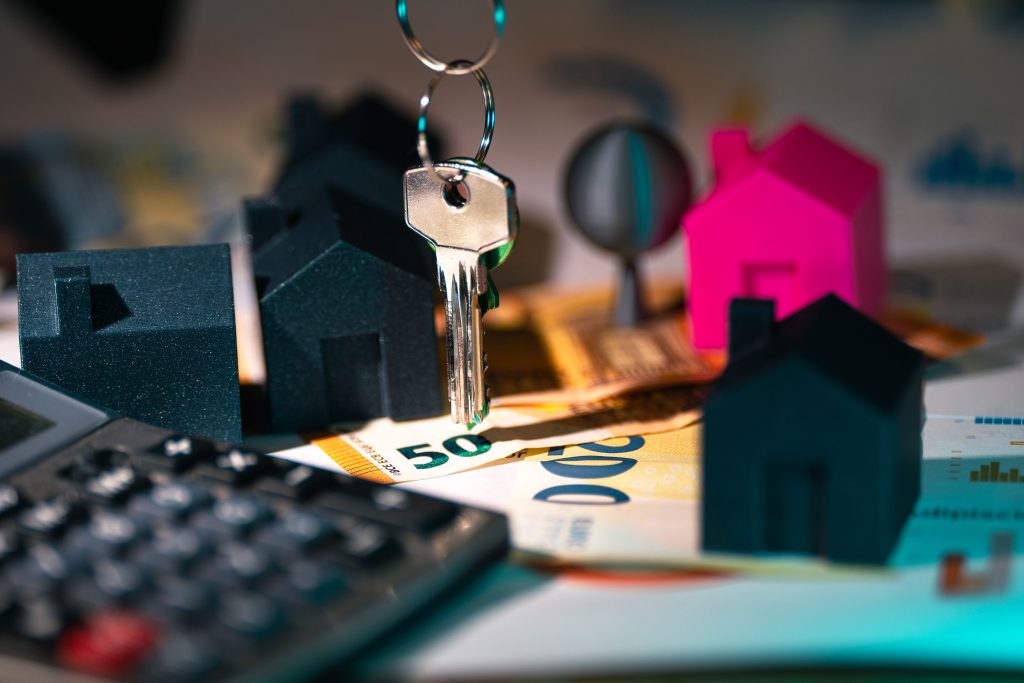
The biggest reason new investors overestimate costs is because they look at the wrong examples. They see glossy coastal markets with million-dollar duplexes and assume every rental purchase requires that kind of capital. Meanwhile, duplexes in the Midwest sell for under $150,000 all day long.
Media coverage also skews perception. Articles about billionaire property moguls or luxury short-term rentals in Aspen dominate headlines. Nobody writes viral stories about a nurse who bought a $90,000 single-family home in Ohio and nets $400 a month in cash flow. Yet that second scenario is far more common and far more repeatable.
Another culprit is the assumption that you must buy with all cash or nothing. Financing has opened the door for regular earners to control appreciating assets with a fraction of the sticker price upfront. Once you understand leverage, the math changes dramatically.
What Does a Realistic Down Payment Actually Look Like?
The down payment is the single largest cash outlay for most buyers, and it varies wildly depending on loan type and property use. For a traditional investment property with a conventional loan, expect to put down a meaningful chunk. According to TurboTenant, most lenders ask for a down payment of 15% to 30% when the property is not your primary residence.
That range depends on your credit score, the number of units, your debt-to-income ratio, and whether you already own other investment properties. A duplex might require less than a four-plex. A borrower with a 780 credit score will see better terms than someone at 660.
Here is a quick breakdown of common down payment scenarios:
- FHA loan on a primary residence (including house hacks): 3.5%
- Conventional loan on a primary residence: 5% to 20%
- Conventional loan on a single-family rental: 15% to 25%
- Conventional loan on a 2 to 4 unit rental: 20% to 30%
- DSCR or portfolio loans for investors: 20% to 25%
LendingTree confirms that in many cases, you need at least a 15% down payment to purchase a rental, which is the floor most borrowers should plan around.
The Hidden Costs Nobody Warns You About
Everyone focuses on the down payment and forgets about everything else. That oversight is why so many new landlords get crushed in their first year. Closing costs alone can run several thousand dollars, and prepaid items like taxes and insurance stack on top.
According to BiggerPockets, buyers should expect between 3% and 6% of the sale price in closing costs. On a $150,000 property, that is anywhere from $4,500 to $9,000. Not pocket change.
Reserves Are Non-Negotiable
Lenders often require you to show cash reserves equal to several months of mortgage payments. Even when they do not, you should have them anyway. A broken furnace in January does not care that you emptied your savings at closing.
A healthy reserve for a single rental is typically four to six months of PITI (principal, interest, taxes, insurance) plus a cushion for repairs. For a property with a $1,100 monthly payment, that means $4,400 to $6,600 set aside before you ever collect a dime of rent.
Running the Real Numbers on Your First Deal
So let us get specific. If you are asking how much money needed to invest in real estate rentals as a beginner, the answer depends on what market you shop in and what strategy you pick. For a modest $130,000 single-family home with a 20% down conventional loan, here is what the total cash picture looks like.
ARVCalc puts the full cash requirement at between 25% and 32% of the purchase price when you add together the down payment, closing costs, prepaid taxes and insurance, and three to six months of reserves. On a $130,000 house, that works out to roughly $32,500 to $41,600 total.
Here is how that cash might break down on a $130,000 deal:
- Down payment at 20%: $26,000
- Closing costs at 3%: $3,900
- Prepaid taxes and insurance: $1,800
- Six months of reserves: $4,500
- Minor move-in repairs: $1,500
Total: roughly $37,700. That is a real, achievable number for a lot of working professionals who save intentionally for a couple of years. And it is a far cry from the $200,000 figure people imagine when they picture becoming a landlord.
How to Get Started With Less Cash Than You Think
If $37,000 still feels out of reach, there are legitimate paths that require significantly less. These strategies take more hustle and more learning, but they have launched countless portfolios from near-zero starting points. Real estate investing rewards creativity almost as much as capital.
The most popular low-money entry point is house hacking. You buy a 2 to 4 unit property as your primary residence using an FHA loan at 3.5% down, live in one unit, and rent the others. On a $200,000 duplex, you are in for about $7,000 down plus closing costs. The tenants help cover your mortgage while you build equity.
Consider these additional low-capital approaches:
- Partnering with a friend or family member who provides the down payment while you manage the deal
- Seller financing, where the current owner acts as the bank and negotiates flexible terms
- The BRRRR method (buy, rehab, rent, refinance, repeat) to recycle the same capital across multiple properties
- USDA loans in rural areas, which offer zero down for qualifying buyers
- VA loans for veterans, which also require no down payment on multi-unit properties up to four units
Each of these has tradeoffs. Partnerships can get messy. Seller financing takes patience to find. BRRRR requires accurate rehab estimates and a lender willing to refinance. But they all work when executed carefully.
Which Markets Make the Smallest Budgets Work?
Location changes everything about the math. A $400,000 entry price in Denver gets you the same cash flow as a $120,000 property in Cleveland or Memphis. For investors with limited capital, picking the right market is more important than any other decision.
Look for markets where the price-to-rent ratio favors landlords. A good rule of thumb is the 1% rule, meaning monthly rent should equal at least 1% of the purchase price. A $100,000 house renting for $1,000 a month hits the target. That ratio is almost impossible in coastal cities but common in the Midwest and parts of the South.
Secondary Cities Deserve a Serious Look
Cities like Birmingham, Indianapolis, Kansas City, and Oklahoma City consistently show up on affordability lists. They have stable job markets, growing populations, and rental demand strong enough to keep units occupied. More importantly, the entry prices let a first-time buyer get in without draining every account they own.
When you evaluate a market, pay attention to job diversity, population trends, landlord-tenant laws, and property tax rates. A cheap house in a shrinking town with hostile rental regulations is not a bargain. A moderately priced house in a stable secondary city with pro-landlord laws usually is.
Neighborhoods Matter More Than Cities
Even within a strong city, block-by-block differences are huge. A $90,000 house in a declining pocket will bleed you dry with turnover and damage. The same $90,000 spent two miles away in a working-class neighborhood with stable tenants can cash flow for decades.
Drive the streets at different times of day. Talk to local property managers. Check crime maps and school ratings. Spending a weekend getting familiar with an area pays for itself many times over before you ever write an offer.
Should You Save Longer or Jump in Sooner?
This is the question that paralyzes most beginners. Waiting means more savings and more options, but it also means missing years of appreciation and rent growth. Jumping in sooner means tighter margins and more stress, but it also means learning faster and compounding earlier.
The right answer depends on your personal situation. If you have no emergency fund outside of the deal, keep saving. If a single vacancy would force you to sell at a loss, keep saving. But if you have reserves, stable income, and a modest property picked out in a reasonable market, waiting another two years rarely improves the outcome enough to justify the delay.
A smaller first deal teaches you things no book or podcast can. You learn how tenants actually behave, how repairs actually get scheduled, how your lender actually communicates. That education is worth far more than the extra $15,000 you might save by waiting.
Financing Options Beyond the Standard Mortgage
Conventional loans are the default, but they are not the only game in town. Depending on your situation, alternative financing can lower your upfront cash or open doors that traditional banks keep closed.
- DSCR loans qualify you based on the property’s rental income instead of your personal income, which helps self-employed buyers
- Portfolio loans from local banks keep the mortgage in-house and allow more flexible underwriting
- Home equity lines of credit on your primary residence can fund a down payment on a rental
- Private money from individuals in your network often costs more in interest but closes faster than a bank
- Hard money loans work for short-term rehab deals when you plan to refinance quickly
Each product has its own cost structure and risk profile. A DSCR loan might carry a slightly higher rate but save you weeks of income documentation. A HELOC gives you flexibility but puts your home on the line. Match the tool to the job rather than defaulting to whatever your first banker suggests.
Mistakes That Can Wipe Out Your Starter Budget
Even with a smart purchase price and solid financing, a few avoidable errors can turn a promising rental into a money pit. New investors tend to underestimate repair costs, overestimate rent, and skip tenant screening to fill vacancies faster. Each of these decisions chips away at the return you worked so hard to build.
One trap worth studying is the long list of rental property cash flow mistakes that quietly sink first-year landlords. Things like trusting a seller’s rent roll without verifying leases, ignoring capital expenditures in your projections, or self-managing without any systems in place all show up repeatedly in post-mortems of failed deals.
Another common misstep is confusing a flip with a rental. The two require different numbers, different timelines, and different exit strategies. If you ever want to pivot toward flipping, study profitable house flipping upgrades before you swing a single hammer, because the wrong renovation choices can eat an entire profit margin in a weekend.
Budgeting for the First 12 Months of Ownership
The first year of owning a rental is when most surprises happen. The water heater fails. The tenant moves out two months after signing. A tree limb takes out the gutter. If your budget only accounted for the purchase, you are already behind.
Plan for these ongoing costs as a percentage of gross rent:
- Vacancy: 5% to 8%
- Repairs and maintenance: 5% to 10%
- Capital expenditures (roof, HVAC, appliances): 5% to 10%
- Property management if outsourced: 8% to 10%
- Insurance and taxes: varies by location, built into PITI
On a property that collects $1,200 a month, that adds up to roughly $300 to $500 in reserved expenses before you count the mortgage itself. Investors who skip this step often brag about their cash flow in month three and panic in month nine when reality catches up.
Build a Separate Account for the Property
Keep rental income and expenses completely separate from your personal checking. A dedicated account makes bookkeeping cleaner, tax time easier, and emotional decisions less likely. When you see the property’s money as the property’s money, you stop raiding it for vacations or car payments.
How Experienced Investors Scale From One to Many
Getting the first property is the hardest part. Once you own one performing rental, the path to the second and third gets smoother. You have proof of concept, a relationship with a lender, and real numbers to show future partners or banks.
Many investors recycle their initial capital through refinancing. After a year or two of appreciation and loan paydown, a cash-out refinance can return a chunk of the original down payment to fund the next purchase. Done carefully, this allows a single pool of savings to control multiple properties over time.
Others scale through 1031 exchanges, trading a small starter property for a larger one while deferring capital gains taxes. This path takes more planning and tighter timelines, but it allows portfolios to grow without the drag of a full tax bill at every step.
Conclusion
The barrier to owning rental property is lower than most people think, but it is not zero. A realistic beginner budget in an affordable market sits somewhere between $20,000 and $40,000 when you account for down payment, closing costs, reserves, and a buffer for the unexpected. Strategies like house hacking, seller financing, and partnerships can shrink that number dramatically for buyers willing to think outside the standard playbook.
What separates investors who succeed from those who stall is not the size of their starting bankroll. It is the willingness to run honest numbers, pick a market that fits their budget, and plan for the costs that do not show up on the closing statement. A $130,000 house in Indianapolis purchased thoughtfully will build more wealth over twenty years than a $500,000 condo bought on hope in an overheated city.
Start where you are, save with intention, and buy something boring in a stable neighborhood. The first deal does not need to be impressive. It just needs to teach you the game and put a tenant’s rent check into your account every month. Everything after that gets easier.