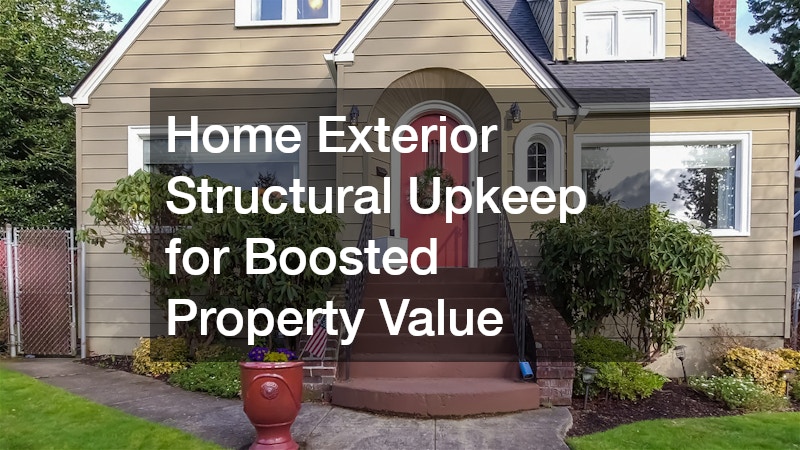
When home value is discussed, attention often gravitates toward high-glamour indoor renovations: updated chef’s kitchens, spa-like primary bathrooms, or open-concept living spaces. While these interior upgrades undeniably captivate potential buyers during open houses, they represent only half of the financial equation. True, resilient property equity rests upon a far more fundamental foundation—the structural integrity of your home’s exterior envelope and surrounding property systems.
A residence with pristine quartz countertops but a sinking driveway, failing masonry retaining walls, or an encroaching tree canopy will quickly face harsh reality during a professional appraisal or home inspection. Buyers, real estate agents, and mortgage underwriters view deferred exterior maintenance not merely as a minor cosmetic inconvenience, but as a significant financial risk. Unaddressed water intrusion, soil displacement, and environmental degradation quietly erode the core structure of a property, leading to tens of thousands of dollars in emergency structural repairs down the road.
By shifting your mindset from reactive repairs to proactive structural upkeep, you protect your primary asset against natural weathering, enhance daily livability, and maximize overall market value. An exterior that demonstrates structural soundness provides immediate reassurance to buyers that the building has been cared for comprehensively from the ground up.
Driveway & High-Traffic Surface Restoration
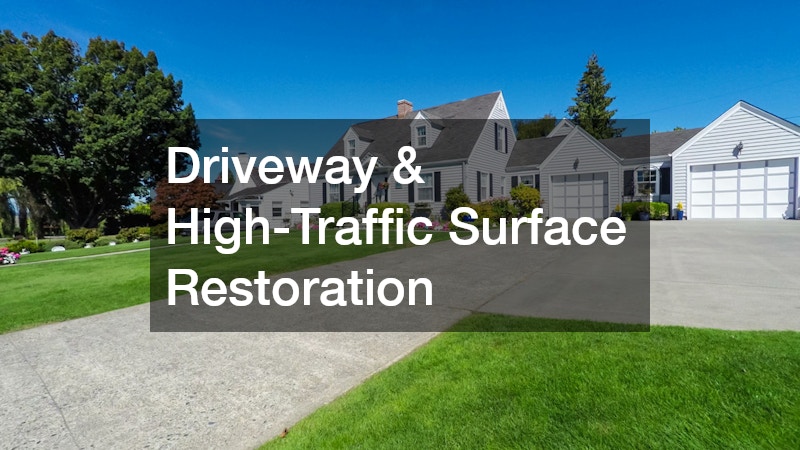
Driveways and vehicular access corridors endure some of the highest structural loads on any residential parcel. Beyond supporting thousands of pounds of rolling vehicle weight, these high-traffic surfaces act as the primary watershed channel for the front of your property. When a driveway surface degrades, water infiltration begins to compromise the underlying sub-base layer, leading to severe soil erosion, localized sub-grade settling, and eventual frost-heaving during freezing weather cycles. If left unaddressed, minor surface cracks quickly evolve into systemic structural failures that direct heavy surface runoff directly toward your foundation walls.
To maintain both functional reliability and aesthetic value, homeowners must understand the underlying mechanics of surface wear and sub-grade physics. Small hairline cracks allow rain and melted snow to seep beneath the top wear course. As moisture collects in the aggregate sub-grade, heavy vehicle tires compress the softened soil beneath, causing the classic “alligator cracking” pattern that signals total base course failure. Rebuilding an entire driveway sub-base is significantly more costly than conducting routine surface maintenance, making early intervention essential for cost-effective property management.
- Signs of Advanced Surface Fatigue: Keep a watchful eye out for standing pools of water that linger for hours after rainfall, localized depressions where vehicle tires regularly rest, crumbling edge lines along lawn borders, and deep, interconnected cracking networks across primary driving lanes.
- Strategic Repair Protocols: Small cracks under a quarter-inch wide should be thoroughly cleaned of vegetation, sand, and organic debris before being sealed with cold-pour or hot-rubberized elastomeric fillers. For broader surface degradation, engaging professional paving services allows for targeted skin-patching or full-depth mill-and-overlay restoration, renewing structural stability and surface smoothness without requiring a complete teardown.
- Long-Term Protection Strategies: Protective sealcoating should be applied every two to three years to defend petroleum binder layers against ultraviolet degradation, vehicle fluid leaks, and chemical erosion. Partnering with a reputable asphalt company ensures that aggregate mix temperatures, compaction densities, and surface slope angles are accurately specified to shed water cleanly toward designated municipal drainage channels rather than adjacent residential structures.
A well-maintained driveway creates an immediate perception of high-quality property care, offering a clean, unified transition from the street to the residence while preventing expensive water diversion issues around your home’s foundation.
Concrete Flatwork & Foundation Slope Management
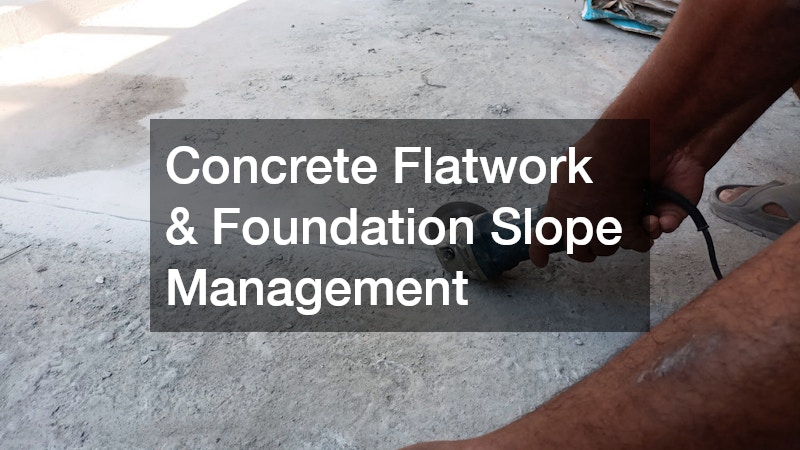
Walkways, patios, and outdoor concrete slabs are far more than simple walking paths; they serve as a critical exterior defense layer designed to route surface water far away from your dwelling. Over time, organic soil compaction, expansive clay soil expansion, invasive root growth, and subsurface washouts cause heavy concrete flatwork to tilt, sink, or break apart. When slabs settle inward toward the foundation rather than outward toward the lawn, every rainstorm channels hundreds of gallons of water directly against subterranean basement walls. This intense hydrostatic pressure leads to interior basement flooding, wall bowing, efflorescence, and fine structural fractures in load-bearing concrete footings.
Addressing compromised concrete slabs requires a strict understanding of grade geometry and slope mechanics. A minimum slope of at least one-quarter inch per foot away from the house structure is essential for adequate surface runoff. When slabs lose this positive pitch, immediate structural intervention is required to prevent water damage from expanding into the home’s main structural framing and crawlspace environments.
- Red Flags in Concrete Flatwork: Inspect your walkways systematically for trip hazards greater than one-half inch, differential settling where slabs meet exterior foundation walls, standing water along building margins, and wide, unsealed expansion joints.
- Tactical Remediation Techniques: Sinking concrete slabs can often be lifted back to their original engineered grade through high-density polyurethane foam injection or traditional mudjacking techniques. Utilizing qualified concrete services ensures that void filling beneath settled slabs is performed with precision, restoring positive drainage slope without the massive expense, noise, and site disruption of total concrete demolition.
- Precision Modifications and Joint Maintenance: When individual panels are severely damaged or require strategic removal to install sub-surface French drains or utility conduits, specialized exterior slab sawing services allow contractors to make clean, continuous cuts through thick reinforced concrete without fracturing surrounding structural slabs or disturbing sensitive underground utility lines.
Regularly sealing control joints and slab edges with self-leveling polyurethane elastomeric sealants keeps moisture out of the joint voids, stopping freeze-thaw cycles from lifting, cracking, or displacing your flatwork during extreme seasonal weather transitions.
Masonry & Stonework Structural Integrity
Masonry features, including structural brick veneers, stone entryways, chimneys, and load-bearing retaining walls, provide exceptional architectural character and substantial structural resistance. However, masonry is intrinsically dynamic; it expands, contracts, and reacts continuously to ambient moisture levels and dramatic temperature variations. The mortar holding these heavy masonry units together is engineered intentionally as a sacrificial element, meaning it degrades faster than the stone or brick itself to protect the primary structural building blocks from cracking under stress.
When mortar joints crumble, open pathways are created for rain and ground moisture to penetrate deep into the interior wall cavity or the soil mass behind retaining structures. In retaining walls, trapped water creates immense hydrostatic pressure that can bow or completely push over heavy stone barriers. On exterior home walls, moisture trapping leads to hidden timber framing rot, interior mold growth, and spalling brick faces where freezing water pops the brick surface clean off.
- Moisture Indicators in Stone and Brick: Walk your property perimeter to search for efflorescence—a chalky white salt residue left behind when water evaporates through porous masonry—as well as cracked mortar lines, spalling brick faces, deteriorated chimney crowns, and leaning retaining walls.
- Tuckpointing and Joint Restoration: Mortar that has deteriorated to a depth of one-half inch or more must be raked out cleanly and replaced through skilled tuckpointing. Contracting licensed masonry contractors ensures that the new mortar matches the original mix’s breathability, color, and compressive strength, preventing premature cracking or accelerated decay of older, softer brick materials.
- Alternative Surface and Pathway Solutions: For extensive long-distance driveways, secondary farm roads, or rustic utility paths where traditional solid masonry or concrete is cost-prohibitive, incorporating chip seal services provides a durable, high-traction alternative. This proven application combines liquid asphalt binder with crushed stone aggregates to form a stable, weather-resistant surface that resists soil erosion while supporting heavy vehicular loads.
Ensuring that weep holes at the base of brick veneer walls remain completely clear of debris and installing gravel drainage beds with perforated drain pipes behind retaining walls are critical actions that keep masonry dry, structurally stable, and visually impressive for decades.
Boundary Fortification & Property Line Enclosures
Perimeter fencing clearly defines property lines, provides essential privacy, and safeguards children and pets. From a real estate evaluation standpoint, a well-constructed, stable fence acts as a seamless physical extension of the home’s primary architecture. Conversely, a leaning, rotting, or weather-damaged fence gives an immediate impression of overall property neglect, raising red flags for prospective buyers and home inspectors regarding broader maintenance standards throughout the residence.
The structural longevity of any fence relies almost entirely on what lies hidden beneath the soil surface. While horizontal rails and vertical pickets bear the visual impact of weather, vertical support posts bear the entire physical load of wind shear, soil movement, and gravity. Unprotected wood post tops absorb standing water, while post bases resting in damp soil suffer from rapid fungal rot and wood-destroying insect infestation.
- Structural Warning Signs in Enclosures: Check your perimeter fence for post movement at ground level, horizontal rails sagging between support posts, loose or rusted structural hardware, leaning gate frames, and discolored wood indicating ground-contact moisture decay.
- Best Practices for Enduring Construction: Vertical fence posts must be sunk well below the local frost depth and anchored securely in solid concrete footings supported by gravel drainage beds at the bottom of the hole. This prevents severe frost heave from lifting posts upward out of the ground during severe winter freeze cycles.
- Professional Installation and Boundary Precision: Completing a proper fence installation requires careful consideration of local municipal zoning codes, property line setbacks, wind-load calculations, and underground utility mapping. Partnering with a reputable fencing company guarantees that professional property surveys are consulted, underground utility lines are safely marked prior to excavation, and high-quality, weather-resistant materials are used throughout the build.
By maintaining structural posts, applying protective oil-based stains, or choosing durable modern composite materials, you turn boundary enclosures into high-value outdoor assets that enhance privacy, security, and long-term property valuation.
Tree Canopy & Subsurface Root Management
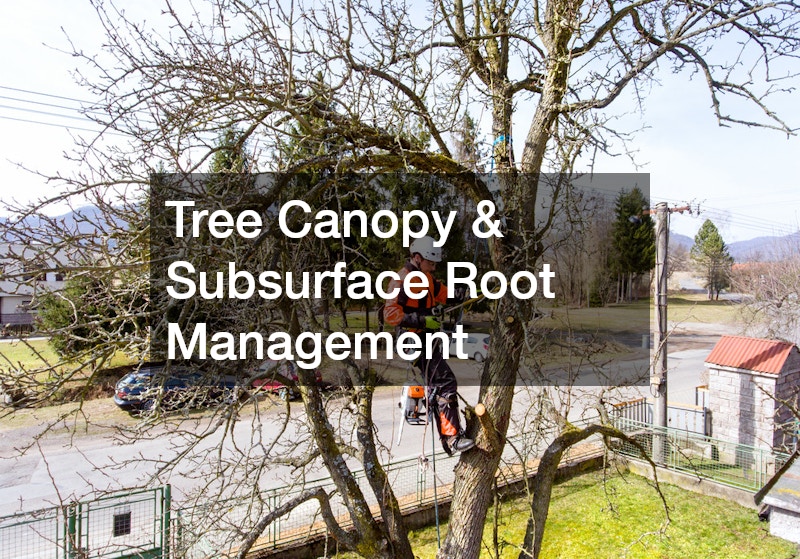
Mature trees offer valuable shade, reduce summertime cooling costs, and create inviting, established landscapes that significantly elevate overall property values. However, without active management, large trees can pose severe structural risks to your home’s envelope and subterranean infrastructure. Overhanging branches drop organic debris onto roof surfaces, clogging gutter systems, harboring wood-boring insects, scraping off protective shingle granules, and threatening roof framing during severe windstorms. Below ground, expanding root networks exert high physical pressure on foundation footings, lift concrete walkways, and penetrate aging sewer lines.
Mitigating tree-related hazards requires balancing arboricultural health with structural protection. Proactive canopy care ensures that large trees remain vibrant natural assets rather than costly liabilities during severe weather events or property appraisals.
- Identifying Hazardous Vegetative Conditions: Inspect tree canopies systematically for deadwood, crossed rubbing branches, leaning trunks, structural V-shaped crotches, and limbs extending within ten feet of your roofline or overhead utility connections. Look for surface roots pushing up nearby paved areas or foundation walls.
- Canopy Management Protocols: Regular crown thinning, canopy raising, and directional pruning remove heavy, high-wind-resistance branches while directing growth safely away from home structures. Engaging certified tree services ensures that structural pruning is performed safely and correctly without compromising the tree’s biological health or physical balance.
- Subsurface Clearing and Site Preparation: When trees must be removed due to disease, decay, or dangerous proximity to foundation walls, leaving the remaining stump creates an attractive breeding ground for wood-destroying organisms like subterranean termites and carpenter ants. Hiring a dedicated stump grinding company completely removes the root collar and primary root system well below grade, eliminating pest hazards and freeing up stable ground for new hardscape construction or lawn installation.
Maintaining clear physical separation between tree limbs, root systems, and structural home elements safeguards your building envelope against storm damage, pest infestations, and costly subterranean pipe repairs.
Maintaining your home’s exterior structural features is a strategic financial investment that pays substantial dividends in preserved property value, structural safety, and long-term peace of mind. While interior updates deliver immediate visual gratification, your home’s exterior elements—from well-graded driveways and solid flatwork to secure perimeter enclosures and managed natural canopies—form the protective shell that preserves your entire property investment.
By identifying minor issues early—such as hairline surface cracks, settling flatwork, crumbling mortar, loose fence posts, or encroaching branches—you prevent manageable maintenance tasks from escalating into major structural failures. Conducting a thorough walk-through of your property every spring and autumn allows you to catch warning signs early and schedule necessary repairs before seasonal weather aggravates existing vulnerabilities.
A home that demonstrates clear structural care, excellent drainage control, and pristine hardscape features stands out in any real estate market. Proactive exterior maintenance protects your building’s integrity, safeguards your home equity, and ensures your property remains a safe, beautiful, and highly valuable asset for generations to come.