
Thinking about renovations that pay back can feel overwhelming when you’re staring at a long list of possible projects. Should you knock down a wall? Replace the roof? Redo the kitchen cabinets you’ve hated since the day you moved in? Every contractor has an opinion, every neighbor has a story, and every design show makes you believe that a fresh coat of paint can double your home’s value overnight.
The truth is calmer and a lot more useful. Some projects consistently return most of what you spend on them when you sell. A smaller group actually returns more than you put in. And a surprising number of popular upgrades, the kind that feel glamorous while you’re picking tile samples, barely move the needle at all. Knowing the difference is the entire game.
This guide is built for someone who has never thought about renovation returns before. No jargon, no pretending you already know what “cost recouped” means. We’ll start with the basics, walk through the projects that tend to pay off, and finish with a simple way to decide what’s worth doing in your own home.
- What Does ROI Actually Mean for a Renovation?
- Why Curb Appeal Projects Punch Above Their Weight
- Interior Projects That Deserve a Second Look
- How to Think About Big-Ticket Home Improvement Decisions
- Which Projects Tend to Disappoint?
- Building a Personal ROI Shortlist
- Budgeting Without Overextending
- When to Renovate Versus When to Sell As-Is
- Conclusion
What Does ROI Actually Mean for a Renovation?
ROI stands for return on investment, and in the renovation world it usually refers to the share of your project’s cost that comes back to you when you sell the house. If you spend $10,000 on a project and it adds $8,000 to your home’s sale price, your ROI is 80%. If it adds $12,000, your ROI is 120%, meaning you earned more than you spent.
That last part surprises people. A renovation can return more than 100% of its cost because buyers pay a premium for a home that looks move-in ready. They’d rather pay you a little extra than deal with the hassle themselves. That premium is where the real money is.
It’s also worth separating two different kinds of return. There’s financial ROI, which is pure dollars in versus dollars out. Then there’s lifestyle ROI, the value you get from actually living with the upgrade. A pool might be terrible financially and wonderful personally. Both matter, but in this guide we’re focused on the financial side.
Why Curb Appeal Projects Punch Above Their Weight
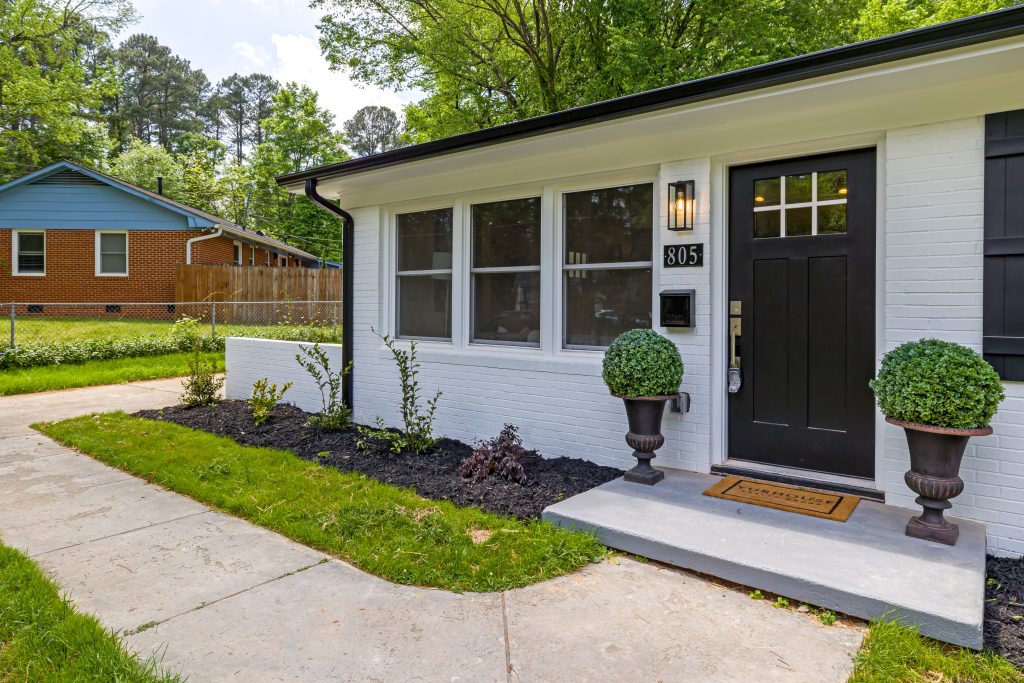
Before a buyer walks through your front door, they’ve already formed an opinion. They saw the driveway, the lawn, the trim, the front step. First impressions are stubborn, and they carry straight into the offer price. That’s why exterior projects tend to deliver outsized returns even though they feel smaller than a full kitchen redo.
The numbers back this up in a dramatic way. According to FirstChair App, garage door replacement leads all renovation projects with a 268% return on cost at resale in 2025. That’s not a typo. A garage door swap can return nearly three times what it costs, mostly because it’s visible from the curb, it’s relatively affordable, and buyers assume a worn door signals bigger neglect behind it.
Entry doors follow the same logic. Data referenced in the Cost vs. Value Report via ProHouseMaintenance shows that a steel front door averaging $2,435 to install can return roughly $5,270 in resale value, landing at about 216% recouped. The pattern is clear: small, visible, exterior, done.
Common high-return curb appeal projects include:
- Garage door replacement
- Steel or fiberglass entry door upgrades
- Fresh exterior paint or siding touch-ups
- New house numbers, lighting, and mailbox
- Clean landscaping with trimmed shrubs and fresh mulch
- Pressure washing the driveway and walkways
Interior Projects That Deserve a Second Look
Inside the house, the hierarchy of returns gets more interesting. Not every room pays the same, and spending more rarely means earning more. In fact, the smaller, smarter interior projects almost always beat the big luxurious ones.
Kitchens are a perfect example. A minor kitchen refresh, meaning new hardware, refaced cabinets, updated appliances, and a solid countertop, consistently outperforms a full gut renovation. According to Zonda data shared by Ruby Home, a minor kitchen remodel returns about 113% of its cost, making it the strongest interior project on the list. That’s better than most major remodels by a wide margin.
Bathrooms play a quieter role. They don’t tend to hit triple-digit returns, but they’re still worth doing when they’re dated or dysfunctional. This Old House reports that bathroom remodels recoup about 72.7% of their cost on average. You won’t get rich on a bathroom reno, but a tired bathroom can actively scare buyers away, which is its own kind of loss.
Where to Spend Inside, Where to Hold Back
Spend on the elements buyers notice immediately: lighting, counters, flooring, and cabinet fronts. Hold back on specialty features that reflect your taste more than general market taste, like heated towel racks, built-in espresso machines, or custom wine cellars. These feel special to you and invisible to a buyer with a budget.
How to Think About Big-Ticket Home Improvement Decisions
The phrase Home Improvement covers everything from a weekend paint job to a $90,000 addition, and the economics shift sharply as the price tag climbs. Bigger projects carry bigger risks because you’re locking in costs upfront while hoping the market still rewards that choice years from now. For anyone also wondering how much money needed to invest in real estate properties beyond their primary home, the same math applies: the project only makes sense if the expected return comfortably clears the cost of borrowing, the risk, and the time.
Big-ticket projects aren’t automatically bad. Roof replacements, HVAC upgrades, and window replacements may not post flashy ROI numbers, but they prevent a sale from falling apart during inspection. That’s a hidden form of return. A buyer walking away from a deal over a failing furnace is far more expensive than replacing the furnace yourself.
If you’re renovating with future rental income in mind, the decision framework overlaps heavily with what first-time property investors face when weighing startup costs for rental properties. The same discipline, run the numbers before you fall in love with the vision, applies in both situations.
A Simple Test Before You Commit to a Major Project
Ask yourself three questions. Would a typical buyer in my price range expect this feature? Will I still be here long enough to enjoy it myself if the market cools? Can I pay for it without borrowing against money I’ll need for something else? Two yeses and you’re probably fine. Fewer than two, pause.
Which Projects Tend to Disappoint?
Some renovations feel like they should pay off and just don’t. Understanding this list early can save you tens of thousands of dollars.
Projects that consistently underperform include:
- In-ground swimming pools in cooler climates
- Sunrooms and three-season additions
- High-end primary suite additions
- Fully custom home offices
- Luxury kitchen renovations with imported finishes
- Backyard outdoor kitchens with built-in appliances
The common thread is personalization. The more a project reflects a specific taste, the smaller the buyer pool willing to pay a premium for it. A pool buyer is a specific person. A clean, updated kitchen appeals to almost everyone. Breadth of appeal is what drives ROI, not sticker price.
Energy efficiency upgrades sit in a strange middle zone. Buyers say they value them, but don’t always pay a premium for them at closing. The return often shows up in your monthly bills instead, which is a legitimate payoff, just not one you capture atsale.
Building a Personal ROI Shortlist
Every house is different, and the national averages can only take you so far. A garage door that returns 268% nationally might return less in a neighborhood where every house already has a new one, and more in a block where yours is the last original. Context shapes everything.
Start by walking your property the way a stranger would. Park across the street, cross the sidewalk, and approach your front door slowly. What do you notice first? What looks tired? What looks fine but dated? Write it down without judgment. This list, not a glossy magazine spread, is the honest starting point for your plan.
Next, compare your home to recently sold homes nearby in the same price bracket. If three of the last four sales had updated kitchens and yours doesn’t, you now know where the market is quietly pricing you down. If every home in the area has beige carpet and you’re thinking about hardwood throughout, you’ve found an edge worth pursuing.
Sequencing Projects So They Build on Each Other
Order matters more than people realize. Painting before replacing flooring wastes paint on baseboards that will be pulled up. Installing new counters before fixing a leaky faucet is backwards. A rough sequence that tends to work:
- Fix anything structural, mechanical, or safety-related first
- Tackle exterior and curb appeal items next for the visibility boost
- Move to high-impact interior refreshes like kitchens and bathrooms
- Finish with cosmetic layers: paint, hardware, lighting, and staging touches
Working in this order means each phase supports the next instead of undoing it. It also lets you stop at any point and still have a home that shows well, which matters if your timeline or budget shifts.
Budgeting Without Overextending
The fastest way to turn a profitable renovation into a losing one is to spend past the ceiling of your neighborhood. Every block has a price band, and no amount of marble will push your sale above it for long. If homes on your street top out around $450,000, pouring $80,000 into upgrades on a $400,000 house almost never returns what you hoped.
A safer rule of thumb is to keep any single project under roughly 10 to 15% of your current home value, and keep total renovation spending under 25% unless you’re deliberately repositioning the property. Those aren’t hard limits, just guardrails that keep most owners from drifting into territory where the math stops working.
Financing choices matter too. Paying cash means your return is simply resale gain minus project cost. Borrowing adds interest, closing costs, and time pressure to the equation. A project that returns 90% on paper can slip below breakeven once you fold in two years of loan interest. Run the full number, not just the sticker comparison.
Keeping a Contingency You’ll Actually Need
Set aside 15 to 20% of your project budget before you sign anything. Walls hide surprises, old plumbing cracks when touched, and permit requirements shift mid-project. Owners who skip the contingency end up cutting corners on the finishes buyers actually see, which is exactly where the ROI lives. Protect the visible layer by cushioning the invisible one.
When to Renovate Versus When to Sell As-Is

Not every house should be renovated before it hits the market. If your timeline is tight, if you lack the cash cushion, or if local demand is strong enough that buyers are competing for projects of their own, selling as-is can net more than a rushed remodel. Buyers in hot markets often prefer a blank slate at a discount over someone else’s finishes at full price.
The clearest signal to renovate is when a specific flaw is actively repelling offers. Dated kitchens, worn carpet, cracked driveways, and dark paint colors all show up in buyer feedback over and over. Fix the loudest complaint, not every complaint. One well-chosen project can shift a listing from stale to competitive without the cost or chaos of a full overhaul.
The clearest signal to skip renovations is when your home is already priced near the top of its comparable set. At that point, more spending is unlikely to raise the ceiling. A professional cleaning, decluttering, and smart staging will do more for the final number than another round of construction.
Conclusion
Renovation returns come down to a handful of durable patterns. Small, visible, exterior-facing projects tend to outperform expensive interior ones. Refreshes beat gut jobs. Broad appeal beats personal taste. And the owners who do best are the ones who treat their home as a market product during planning, even if they treat it as a personal sanctuary while living in it.
You don’t need to memorize every statistic or chase every trend to get this right. Walk your property honestly, compare it to what’s actually selling nearby, protect your budget with a real contingency, and sequence your work so each phase strengthens the next. Those four habits will guide you to better decisions than any single remodeling checklist ever could.
The goal isn’t to turn your house into someone else’s dream. It’s to spend thoughtfully on the things that pay you back, enjoy the upgrades while you live there, and hand the next owner a home that feels cared for. When those three things line up, the returns tend to follow on their own.